The Course
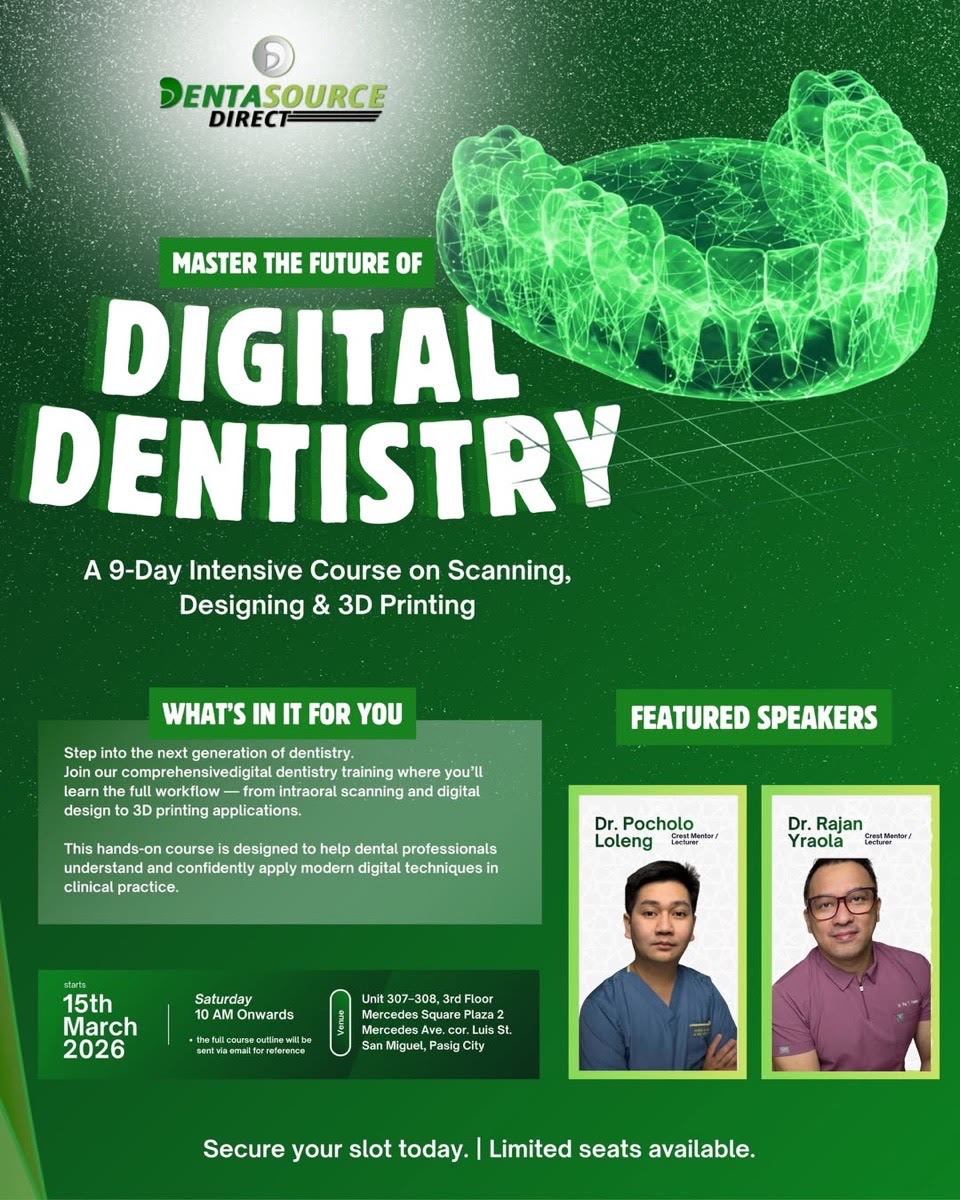
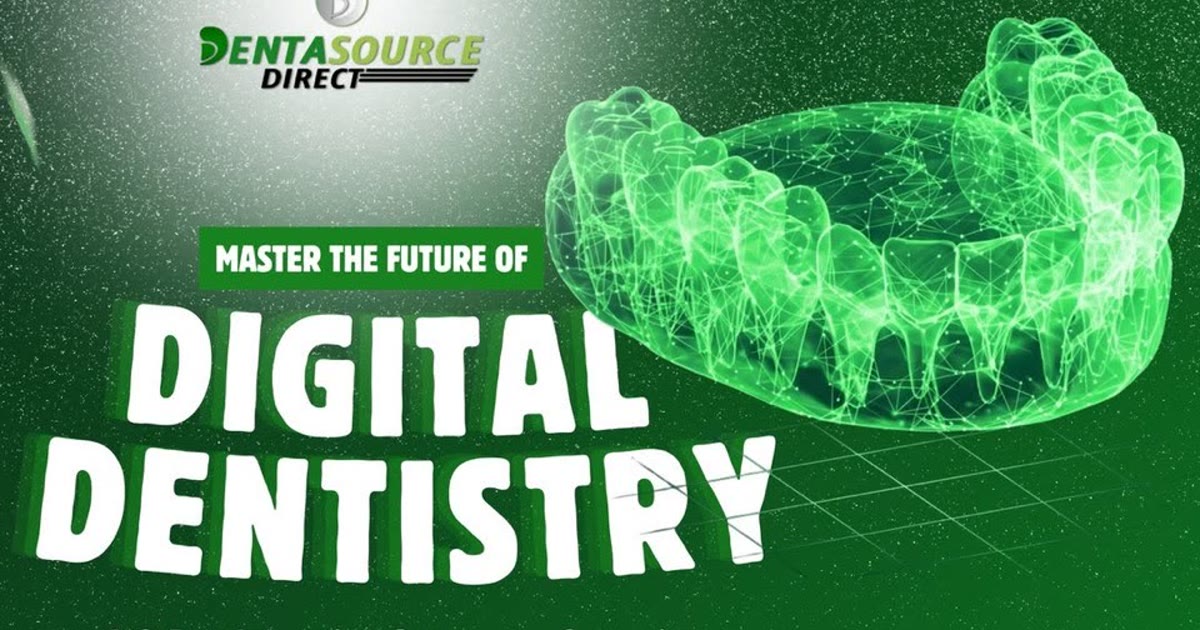
We announced our 9-Day Digital Dentistry Course on March 13, 2026 and followed it the next day with a video invitation. The course covers the full digital workflow, scanning to designing to 3D printing, and it opened on March 15, 2026 at 10 AM at our Training Center, Units 307 and 308, 3rd Floor, Mercedes Square Plaza, Mercedes Avenue corner Luis Street, San Miguel, Pasig City.
The mentors are Dr. Pocholo Loleng and Dr. Rajan Yraola, both Crest mentors and lecturers. Slots were limited, which is a function of the room rather than a marketing line. A hands-on course is capped by the number of simulator stations, and every seat has to be a station.
Scanning, Designing, Printing
Those three words describe one chain, and the course is built to follow it rather than to teach three separate tools.
Scanning replaces the impression tray. An intraoral scanner reads the arch as a stream of images and stitches them into a three dimensional model on screen, which means the operator can see a gap or a missed margin while the patient is still in the chair rather than after the stone has set.
Designing is what happens to that model next. The restoration is built in software, on the scan, against the opposing arch and the recorded bite. Margins, contacts and occlusion are decided by the clinician on screen, at a size no loupe would give you over a physical die.
Printing is where the file becomes an object again. Models, guides and provisionals come off a printer in the hours it used to take to courier a case in one direction. The reason the course runs nine days rather than one weekend is that each of those three stages has its own failure modes, and you only learn them by producing bad results under supervision and then fixing them.
Inside the Training Center
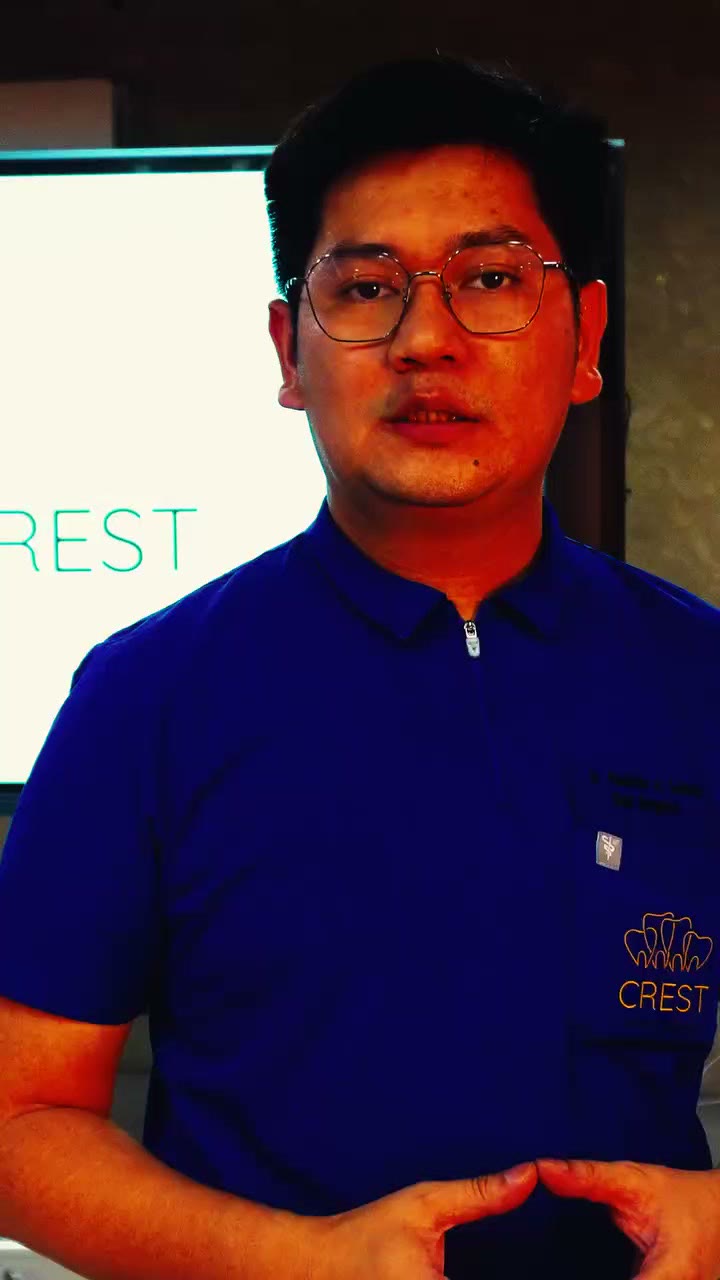
The video invitation opens on the Crest study group banner, then one of the course mentors speaking to camera in a blue Crest polo. The rest of it is the room itself, which is the honest way to advertise a hands-on course.
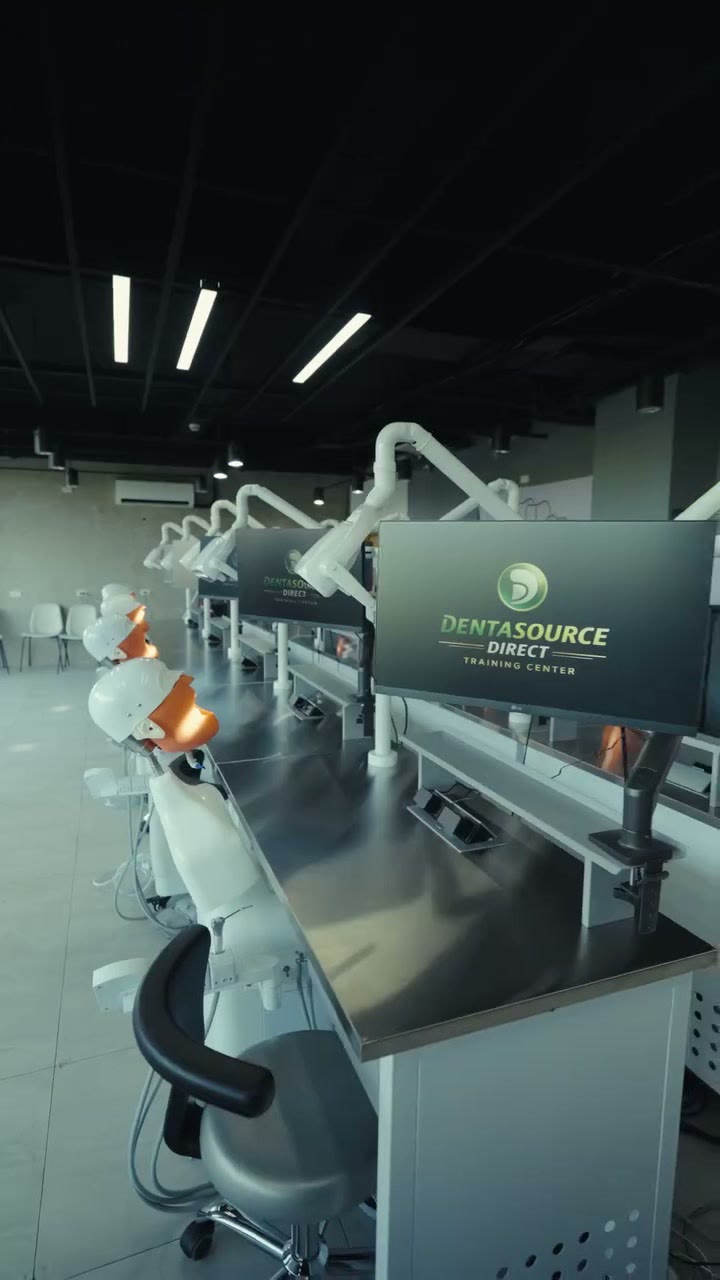
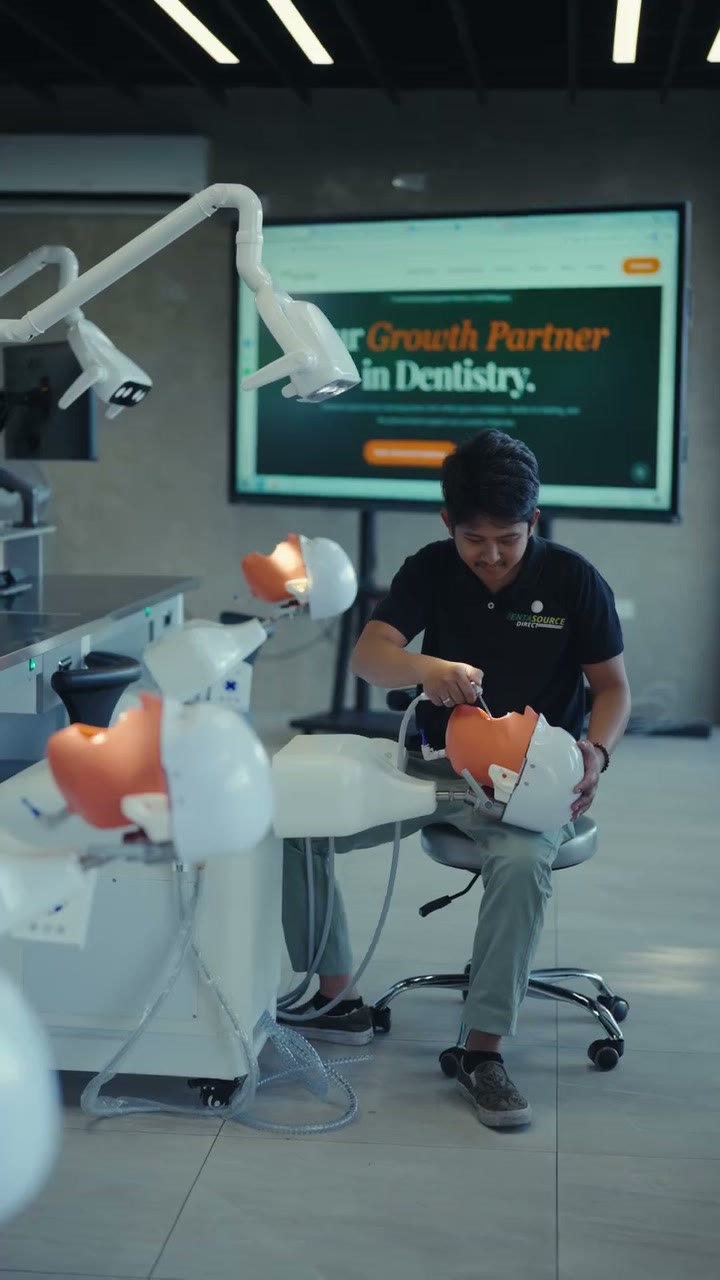
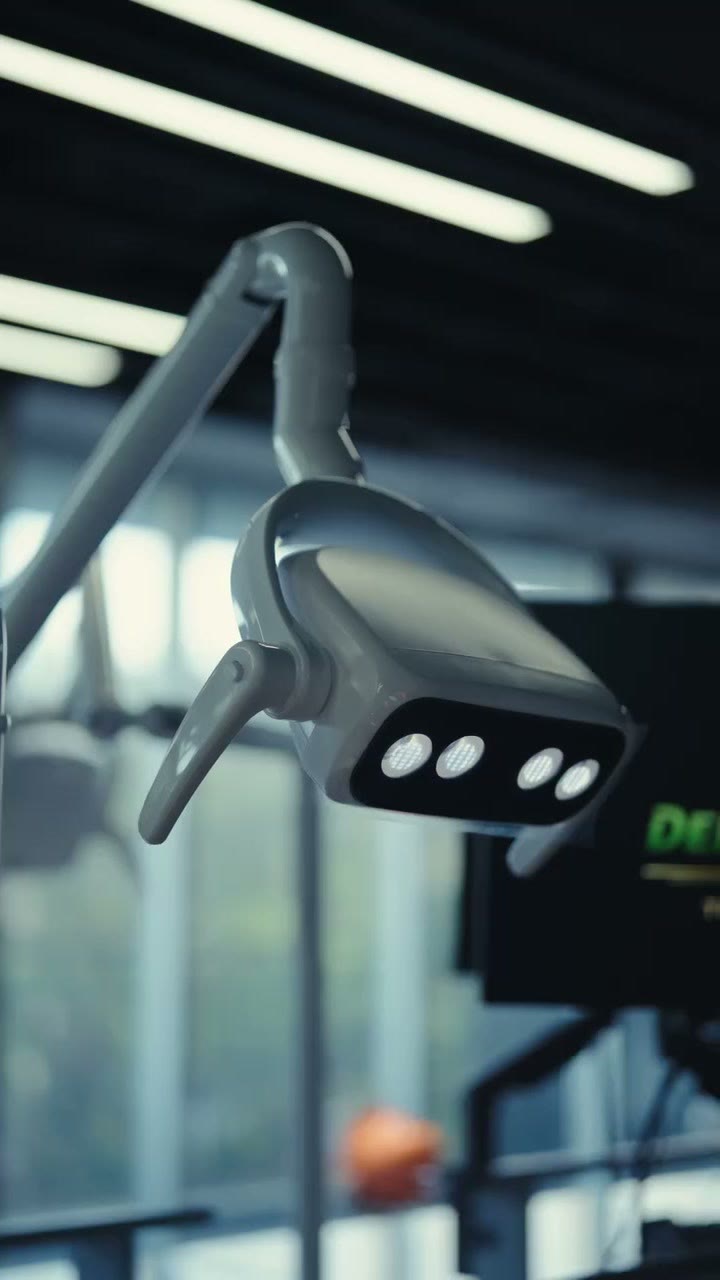
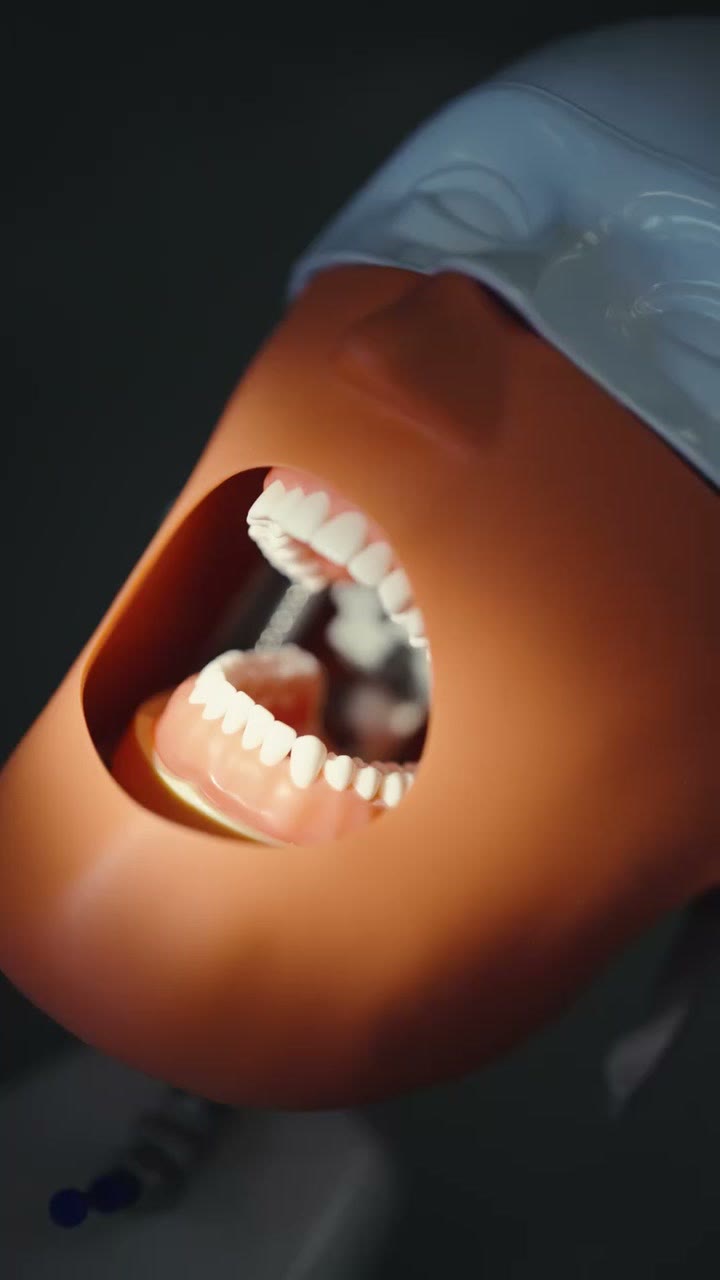
The Training Center runs a row of simulator stations, each with its own phantom head, light and services. A phantom head is a mounted model of the jaws that takes real burs, real files and real handpieces. It lets a clinician work at the correct angle, at the correct distance, on something that behaves like a tooth, and get a technique wrong without a patient absorbing the consequences.
Who It Is For
The invitation was addressed to dentists and to dental technicians, and both belong in the room. In a digital workflow the two roles overlap far more than they used to. The clinician who understands what a designer needs from a scan sends better scans, and the technician who has watched a preparation done in front of them designs to what the mouth will actually accept.
It also suits practice owners who have already bought into part of the chain, a scanner without a printer, or a printer nobody is confident driving, and want the rest of it to make sense.
Why It Matters
Digital equipment gets bought faster than it gets used. The gap is almost never the hardware. It is that nobody in the clinic has had nine unhurried days to run a case end to end with someone experienced standing behind them.
That is what the Training Center exists for. It sits a short distance from our showroom in Pasig, and the same units the course teaches on are on the showroom floor.
From Our Facebook Page
Written from our posts of March 13 and 14, 2026.
 Facebook reelWatch the original with sound